
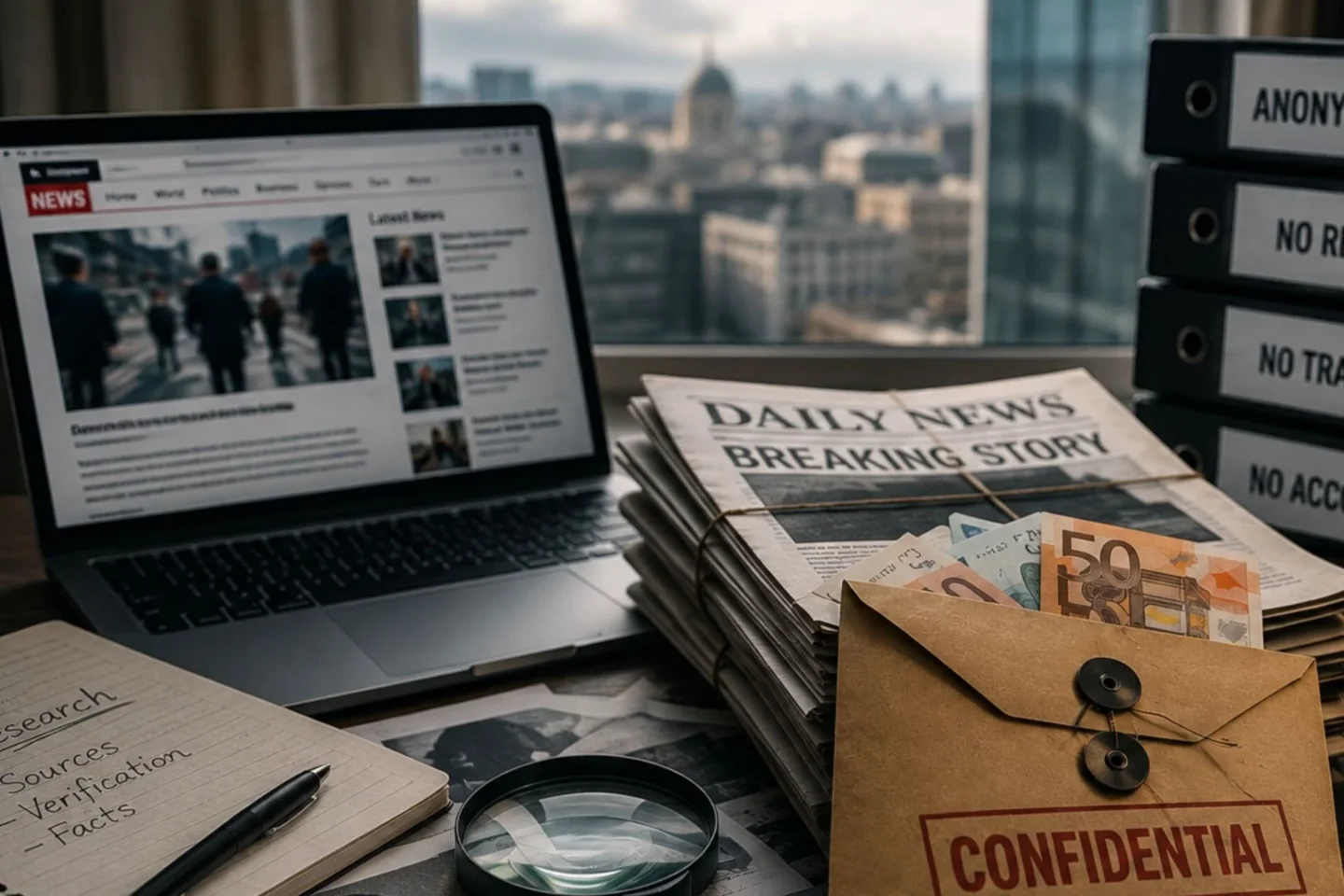




“When I started out as an editor, the only things that looked like news articles were news articles. You could be sure that the people who wrote and edited them were journalists, whose job was to follow a very specific and regulated procedure called journalism. Those days are gone. Now, even savvy news readers find it hard to tell whether they are reading quality information produced exclusively for the reader’s benefit, or something with another agenda.”
(ref: June Casagrande, Los Angeles Times / Daily Pilot, 22 June 2026)
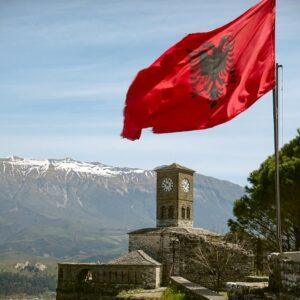
These words from columnist June Casagrande capture a phenomenon now unfolding in one of the smallest and poorest countries in Europe — one that is making strenuous efforts to become part of the European Union: Albania.
The phenomenon in question is that of fake news and disinformation. Albania stands out because, unlike other countries in Europe, what is happening in this state has a particular specificity, distinct from all the others. There, fake news does not merely serve political or geopolitical purposes, as is commonly seen in the fake news of Russian or Chinese media against the West. Its purpose is extortion — enrichment through pressure. Its target is mainly business.
The deliberate creation of articles with disinformative content — built on unverified or manipulated information — is no longer a professional deviation, but a lucrative tool for a handful of people hiding behind the title of journalist: a full-fledged business model based on extorting private companies, and not only. The world saw this model in a particular way in post-1990s Russia, in the era known as “Kompromat” or “Black PR,” when anonymous online sites published manipulated financial data, sexual scandals, or corruption stories about various businessmen. These sites were paid by rival businessmen to destroy competitors’ images, or by the targeted companies themselves, to have the articles removed or to stop further publications. In 2022, the Committee to Protect Journalists (CPJ) reported the arrest of at least eight media workers in Russia precisely on charges of extorting corporate executives.
This phenomenon is now finding fertile ground in Albania on a wide scale, through the mass proliferation of anonymous and unregistered online portals, which exploit the lack of transparency over their ownership and financing, as well as the gaps in the regulatory framework, to produce attacks against businesses, institutions, or individuals.
In Albania, the first arrest of a journalist for extortion took place in February 2026.
The European Commission’s Progress Reports for 2024 and 2025, along with organizations such as Reporters Without Borders (RSF) and the Council of Europe, identify Albania’s media environment as structurally problematic.
The European Commission has repeatedly emphasized the lack of progress, or the limited progress, regarding the transparency of media financing sources and the quality of journalism itself.
Unlike traditional media, which are registered in the government’s commercial register, this category of online portals is not subject to the same level of scrutiny or transparency over financing, making it very difficult to identify the interests they represent.
A considerable share of online portals have no address or fictitious addresses, list no names of journalists or editors, pay no taxes, and report no employees. Yet they publish news daily, in quantities that would require a proper newsroom to produce.
With no identifiable responsible person and subject to no rules, freedom of expression — which was thought to be expanding with the opening of online media — is being abused by a considerable portion of them. They have long since turned into an instrument of blackmail and extortion for illegal gain, undermining public trust in the media and considerably disturbing the economic and social environment.
Official documents from regulatory authorities, media associations, chambers of commerce, and banking associations attest that freedom of expression in the digital space is being used for outright criminal activity — blackmail and the coercion of property, that is, extortion.
According to the Audiovisual Media Authority (AMA), it is estimated that between 650 and 900 Albanian-language online portals operate in Albania.
exxtra 24 submitted requests for information to several authorities and associations: the Audiovisual Media Authority, the Union of Albanian Journalists, the Albanian Media Council, the Chamber of Commerce, the Albanian Association of Banks, and the outlet Faktoje.al, as one of the well-known fact-checking organizations.
In all the responses received, the main problem identified is their status. A massive share of these portals are not registered as legal entities, have no physical address, declare no authorship of their articles, and do not identify their owners or sources of financing.
The Audiovisual Media Authority (AMA) says that since 2023 it has received dozens of complaints about false information targeting individuals, businesses, and institutions.
“During the period 2023–2025, the Complaints Council of the Audiovisual Media Authority administered a total of 109 complaints concerning content published by online media outlets and news portals that fall outside AMA’s regulatory mandate. Specifically, 28 such complaints were administered in 2023, 36 in 2024 and 45 in 2025, representing 7.2%, 10.3% and 10.5%, respectively, of the total number of complaints administered by the Council in each reporting year.”
But AMA is legally unable to take administrative measures against these media, because online news portals do not fall within this authority’s regulatory competence, as it explains in its official response.
Business on alert
Within the Albanian digital media mosaic there are also serious and transparent online media, with addresses, declared owners and journalists, and professionals.
But unlike these sites, or the traditional and professional media that preserve their archives, the ghost portals operate according to a different scheme. False investigative articles, without verified information, are published, circulated, and then deleted as soon as the goal — obtaining sums of money through pressure — is achieved.
The Chamber of Commerce and Industry of Tirana (CCIT), through its President Nikolin Jaka, officially confirms that this phenomenon has become a daily concern for Albanian entrepreneurs.
“During this year alone, the Tirana Chamber of Commerce and Industry has recorded numerous cases involving member companies whose reputation has been seriously harmed as a result of false, inaccurate or intentionally malicious reporting. This is not an isolated or occasional phenomenon. It has become an almost daily occurrence affecting entrepreneurs and major companies alike, primarily through online news portals and social media platforms.”
For the CCIT, these portals are declaring businesses guilty without any court decision.
“Particularly concerning is the fact that certain online portals have gone far beyond the legitimate role of informing the public. Instead, they have prejudged matters that have never been examined by the competent authorities, portraying individuals or businesses as guilty without any judicial decision, thereby creating a form of ‘public trial’ that operates entirely outside accepted legal standards.”
The Albanian Association of Banks (AAB) also sounds the alarm that, since the COVID-19 pandemic, a rise has been observed in defamatory articles targeting banks, their shareholders, and their executives. The purpose of these attacks, according to the AAB, is not the public interest but pressure to obtain favorable treatment in loans or increases in advertising budgets from the banks.
“These platforms frequently publish distorted biographies of banking professionals, misrepresent facts, fabricate stories based on illogical connections, and rely on defamatory content. In the manner and form in which the false reportings were presented, it is not excluded that such publications could have been used as a form of pressure or blackmail aimed at obtaining benefits from banks, such as favorable treatment in loan applications, increased advertising expenditure, or other financial advantages. These practices do not represent legitimate investigative journalism or responsible public scrutiny. Rather, they undermine the principles of transparency, accountability, and fairness that should govern public discourse.”
The impact of this phenomenon is devastating for the economy. There are concrete cases in which reporting based on unverified information has led to the bankruptcy of companies within a few months. This is why the Chamber of Commerce is ringing the alarm bells.
“Such publications have caused substantial reputational damage, loss of customers, declining sales and direct negative impacts on companies’ turnover.”
The Association of Banks likewise warns of severe consequences.
“Such practices have become increasingly common and, if left unaddressed, have the potential to pose risks not only to the reputation of individual institutions, but also to confidence in the banking sector and, ultimately, to financial stability.”
The need for legal changes
Faced with the failure of self-regulation and the difficulty of prosecuting anonymous authors — since the courts often cannot locate them or serve them with summonses — institutions are calling for strict criminal measures.
AMA states that any allegation of blackmail or illegal financial gain through the media has been referred to the competent law-enforcement authorities. The Criminal Code of the Republic of Albania, in the article on coercion by threat or violence to hand over property, provides for prison sentences of two to eight years.
Some businesses have begun this battle, but the costs are again high.
Last month, the owner of one of the country’s largest retail companies, “Megatek,” after facing a coordinated campaign of defamation and fake news aimed at seriously damaging the company’s image, decided not to pay the media “ransom” but to take the legal route. However, he — and the judge who ruled in his favor by ordering the portals to delete the articles — faced another wave of attacks from the same portals. The articles were not deleted, even though the court had issued an order.
At the beginning of 2026, the Tirana Chamber of Commerce submitted to the legislative authorities an official proposal to amend Article 120 of the Criminal Code.
The proposal aims to establish specific criminal liability for journalists or online platforms that deliberately publish false information about a business, that take no measures to verify the accuracy of the news before publication, and that keep the news online even after being officially notified of its inaccuracy, thereby causing serious harm to economic operators.
A few years ago, the Albanian government undertook an initiative to address this phenomenon, but its proposal was seen by certain interest groups as an attempt to control the media and undermine its freedom.
Politicians, for their part, have for years traded mutual accusations among themselves over the capture of the media.
But in such a jungle, where rules are lacking, the use of fake news — turned into a profitable business for the owners of many online portals — is becoming an unbearable burden for businesses and for the many individuals who become the target of such portals.
The pollution of the media environment by unverified news is reaching critical levels.
Many large companies have chosen, as a strategy, to ignore the information from these portals and to cooperate with legitimate and transparent media. But the clear separation between genuine journalism and the use of journalism for blackmail remains one of the immediate challenges of a European Albania.


Recent Comments